Wednesday, 6 June 2012

One Joint 'Same Cancer Risk As 20 Cigarettes'


A "dangerous" lack of awareness about smoking cannabis could be putting millions of people at risk, a leading charity has warned.

Most people (88%) believe smoking cigarettes is worse than cannabis but in fact the risk of developing lung cancer is 20 times greater from a cannabis joint.
A new report from the British Lung Foundation (BLF) claims there is an alarming disconnect between the public perception of cannabis as a relatively safe drug, and the serious, even fatal impact it can have on the lungs of people who smoke it.
Dame Helena Shovelton, chief executive of the British Lung Foundation, said: "Young people in particular are smoking cannabis unaware that, for instance, each cannabis cigarette they smoke increases their chances of developing lung cancer by as much as an entire packet of 20 tobacco cigarettes."
According to the BLF survey, 6.8% of 16 to 59-year-olds in England and Wales have used cannabis in the past year - approximately 2.2 million people.
This makes cannabis the most commonly-used illicit drug in the UK.
Dame Helena added: "This is not a niche problem - cannabis is one of the most widely-used recreational drugs in the UK, with almost a third of the population having tried it.
"We therefore need a serious public health campaign - of the kind that has helped raise awareness of the dangers of eating fatty foods or smoking tobacco - to finally dispel the myth that smoking cannabis is somehow a safe pastime."
The BLF said its report is the most comprehensive review of research data yet compiled on the subject of cannabis use.
The survey was carried out by market research company TNS, on behalf of the charity, among a representative sample of 1,045 people across Britain.
Respondents were asked which, out of smoking a typical cannabis cigarette (also known as a joint or spliff) and smoking a typical tobacco cigarette (either from a packet or a roll-up), increases the risk of developing lung cancer the most.
A total of 88% said tobacco cigarettes posed the greatest risk, and just 12% cannabis.
Almost a third of the those surveyed (32%) said smoking cannabis is not harmful to health, with the figure rising to almost 40% among those the under-35s.
However, smoking one cannabis cigarette a day for a year increases the risk of lung cancer by 8%, according to the BLF report.
By comparison, smoking 20 tobacco cigarettes a day for a year increases the risk of lung cancer by 7%.
Smoking a cannabis cigarette therefore increases the smoker's risk of lung cancer by as much as 20 tobacco cigarettes.
The average puff on a cannabis cigarette is two-thirds larger and is held for four times longer than the average puff on a tobacco cigarette.

Child-Targeted Ads Concern '90% Of Parents'


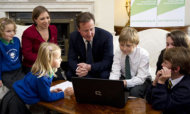
The vast majority of parents remain concerned about the sexualisation of childhood, a year after the Government pledged to tackle the issue.
A report has found that 90% of parents are concerned by inappropriate adverts, billboards and music videos.
The survey also discovered that the 85% of parents have never heard of the website ParentPort , which the Government created to offer them advice and help make a complaint.
Chris Moriarty from CIM research which carried out the survey told Sky News: "We've definitely seen improvements, the examples we saw last year were shocking, the pole dancing kits and such like, we're not seeing those anymore, but the innocent mistakes people are making, they haven't completely thought a product through.
"An example is a 'Future WAG' t-shirt which is one of those innocent mistakes where you think, what is the really harm? But if you looked at the bigger picture, it's those sorts of products that might need a re-think."
In February last year, Prime Minister David Cameron joined in the debate, promising to take action against those companies which are "bombarding" our children with sexual images.
Reg Bailey the chief executive of the Mothers' Union also published the report Letting Children Be Children, in which he called for measures to be taken to stop the "increasingly sexualised wallpaper surrounding children".
But mothers and their teenage daughters shopping in Birmingham have told Sky News they feel there is still a long way to go.
Elizabeth Hill, 15, said: "They don't need to take it as far as they do take it, like in a lot of Rihanna's music videos or with a lot of the rappers. I think a lot of the young kids try and copy them."
Her mother, Dawn Hill, added: "I've got a 15-year-old and I've got grandchildren, I'm not naive and I know that they will see this stuff, but not in my house."
As well as overt images there are concerns that children are being targeted by adverts in far more subtle ways.
The concern is that as children interact on many social networking websites they may then see inappropriate adverts.
The Chartered Institute of Marketing (CIM) is also warning of the danger of inadvertent marketing decisions, which then lead companies to provide products like padded bras for children.
The Advertising Standards Authority said: "The work that regulators, including the ASA, continue to undertake in responding positively to the recommendations in the Bailey review (Letting Children Be Children) has been welcomed by government as well as family and parenting groups.
"ParentPort is a valued resource amongst parents but raising awareness is an ongoing process.
"We'd be delighted if CIM and its members would like to support ParentPort with their expertise and resources."
There is only so much any authority or Government can do given the international nature of many adverts, music videos and TV channels.
When he addressed the issue last year , Mr Cameron accepted that children can't be shielded from the modern world but said he wanted to protect them from "growing up too fast", sentiments it seems which are echoed by the parents questioned in this latest survey.

Tuesday, 5 June 2012

UK Credit Rating cut to AA-minus


Rating agency Egan-Jones cut the credit rating for the United Kingdom on Monday to AA-minus with a negative outlook from AA, the latest in a string of European sovereign downgrades from the agency.
"The over-riding concern is whether the country will be able to continue to cut its deficit in the face of weaker economic conditions and a possible deterioration in the country's financial sector," Egan-Jones said in a statement.
"Unfortunately, we expect that the UK's debt/GDP (ratio) will continue to rise and the country will remain pressed."
The United Kingdom currently has a AAA rating from both Standard and Poor's and Fitch Ratings and an Aaa rating from Moody's Investors Service.
The economy contracted by 0.3 percent between January and March and growth in the second quarter is endangered by the mounting worries about the survival of the euro.
Egan-Jones has recently cut the sovereign ratings for Italy and for Spain, in each case citing the weak economy and banking sectors.
(Reporting by Luciana Lopez; Editing by James Dalgleish)

Monday, 4 June 2012

'Dither and delay' warning on HS2


High speed rail between London and Birmingham might not be achieved in the 2020s because of "endless dither and delay" by the Government, former transport secretary Lord Adonis has warned.
The Labour peer said plans to get HS2 on to the statute book by the end of this parliament could fall victim to wrangling between the coalition parties ahead of the next general election, scheduled for 2015.
The highly-controversial £33 billion network was given the go ahead in January, with a line between London and Birmingham expected to open by 2026.
Urging Prime Minister David Cameron to get a grip on the issue, Lord Adonis said: "If infrastructure projects are going to happen they need someone who is going to drive them forward, and that simply isn't present.
"We are already on the second transport secretary since the election, the Transport Department has had three permanent secretaries in the last two years. There has been endless dither and delay."
Lord Adonis, an architect of the high speed rail plan in the last Labour government, said there were delays to the consultation on compensation for householders affected by the project and in publishing the route north of Birmingham.
He told BBC Radio 4's Today programme: "I think there is now a very good chance that the legislation won't pass in this parliament. It could well get caught up in all the politics leading up to the next election, which I think given the state of the coalition could lead to a very significant further delay and it means that we may not see HS2 now in the 2020s."
Transport Minister Theresa Villiers insisted the project would be delivered "as swiftly as possible" but the Government would "not be rushed".
"This is a major project which will have a significant impact on the future of the country and it is imperative that we get it right.
"We will ensure it is delivered as swiftly as possible but we will not be rushed - all relevant evidence needs to be properly considered, including the views of communities potentially affected by the line, and we will be doing this within the timeframe we set out soon after the Coalition entered Government."

©Press Association

'Supercop' defends UK policing


An American "supercop" who advised the Government after last summer's London riots said he is impressed with the way UK police deal with gang crime.
Bill Bratton, 64, who tackled gangs as head of police departments in New York, Boston and Los Angeles over the last two decades, told Radio 5 Live he does not believe police cuts will lead to a rise in crime.
And he hit out at those who criticise police, saying: "To blame the police, I am sorry, there are other issues at work here.
"Lots of these people are just, unfortunately, criminals.

©Press Association

Sunday, 3 June 2012

Tax U-turns show strength - Cameron


David Cameron insists his Government has "resolve, strength and grit" as he defended a string of enforced U-turns on tax measures.
The Prime Minister said it took courage for an administration to admit it was "ploughing into the brick wall" and change course on high-profile policies.
On Thursday, Chancellor George Osborne bowed to intense pressure to cap tax relief on charitable donations - his third Budget about-face in less than a week.
The switch came hot on the heels of fundamental changes to levies on pasties and caravans announced in March's financial package.
Since taking power in May 2010, the Tory/Liberal Democrat power-sharing coalition has made at least 21 prominent climbdowns - with critics putting the figure far higher.
Labour said the Budget had become an "embarrassing shambles".
But while he acknowledged the "difficulties" thrown up by the Budget, Mr Cameron sought to make a virtue of the Government's willingness to accept its mistakes.
"We've taken difficult decisions on the deficit which we've cut by a quarter in two years, difficult decisions on public sector pay, reforming public sector pensions, standing up to public sector strikes," he told BBC1's Andrew Marr Show.
"Nobody thinks this Government lacks resolve, strength and grit.
"It has all of those things and it also has the courage to say 'Look, if we've got something wrong, let's change it; let's not keep ploughing into the brick wall'."

Saturday, 2 June 2012

Planned 'Granny Flat Tax' Set To Be Scrapped


The Government is expected to abolish a levy on so-called "granny flats" in England, giving families a tax break on extensions to their homes used to house older relatives.
The Communities Secretary Eric Pickles has said it is "fundamentally unfair" to charge households for annexes as well as their own homes.
As a result, hundreds of thousands of families could benefit from the plans rom tax breaks on "granny flats" under plans being considered by the Government .
It is believed ministers are also considering overhauling planning regulations and fees to make it easier for homeowners to convert garages and other outbuildings.
Mr Pickles told the Daily Telegraph: "We are keen to remove tax and other regulatory obstacles to families having a live-in annexe for immediate relations.
"We should support homeowners who want to improve their properties and standard of living. These reforms should also play a role in increasing the housing supply."
He said it was unfair for households to be charged twice by paying council tax on their homes and annexes - which are regarded as separate dwellings.
It is estimated that as many as 300,000 households in England could benefit from the change.
The reforms are expected to form part of a package of policies to increase housing supply and address the shortage of affordable homes over the next two years.