Friday, 25 May 2012

Online Privacy Controls Come Into Effect


A new law comes into force this weekend requiring all websites to ask permission from users before using 'cookies' - data files that remember computer logins, email addresses and previous internet activity.

The new rules, contained in an EU directive, mean UK websites must be upfront with visitors about the tracking tools they use, including providing sufficient information for users to say whether or not they consent to their cookies.
The Information Commissioner's Office ( ICO ), the body responsible for regulating the new law, said the changes would address consumer concerns over privacy.
David Evans, ICO group manager told Sky News: "Whilst lots of cookies are perfectly harmless, in some areas these cookies were being used to do things which might be seen as intrusive.
"It was enabling organisations who you had never heard of to make profiles about your activity, make decisions about you."

The legislation has been in place since May 2011 but companies have been given a year to change their practices ahead of May 26, when the law kicks in fully, because of the difficulties involved.
Mr Evans said the ICO, which has powers to fine websites that do not comply, would not be pursuing those "on the road to compliance".
He added: "We will focus our resources on those people who are really not trying to protect their consumers."
But with implementation estimated to cost £10bn, there is concern from the e-commerce sector that this is an unnecessary burden in the midst of a double dip recession .
According to digital marketers Econsultancy, early experience has shown that a site which asks permission to place an analytics-related cookie can suffer a 90% drop in people consenting to cookies.
Since companies use cookies to help them arrange the content and layout of websites and recognise users who have visited their website previously, businesses fear a detrimental knock-on impact on their ability to analyse customers' data.
The tiny cookie text files are also used to identify which sections and articles on a site are the most popular and how users navigate through web pages.
The ICO wants members of the public to report organisations that install cookies on their PC devices without their knowledge via an online complaints form.
But a new survey by Ipsos Mori for online privacy experts Truste has revealed that only a quarter of Brits know that the new law is coming into effect.
Truste recently revealed that the typical British internet user will encounter up to 140 cookies every time they visit a website .


©SkyNews

'Yes Scotland': Independence Campaign Launches Ahead Of 2014 Vote


A major drive to persuade people Scots to vote for independence begins on Friday.
The cross-party body Yes Scotland will kick-start its campaign to leave the United Kingdom.
Organisers have vowed to stage the "biggest community-based campaign in Scotland's history" in the run-up to the independence referendum, which could take place in October 2014.
They aim to convince voters that "the people who care most about Scotland are the people that should be running Scotland".
Alex Salmond, the First Minister and Scottish National Party leader, will be one of the key figures at today's launch.
Former Labour MP Dennis Canavan, who later became an independent MSP, has been named as another of the supporters at Friday's event.
A host of celebrities and public figures have been lined up but their identities are secret until today's launch at Edinburgh's Cineworld Cinema.
A Yes Scotland spokesman said: "We have a 550-seat venue full to capacity and we could have filled it again with the level of interest we have received.
"We will have 100 journalists from all corners of the world, from China to the United States, from Spain to Germany, reflecting the interest generated not only in Scotland but internationally.
"We chose a cinema because it's a place where real people go, in contrast to a conference centre or other traditional venues, and we wanted to send a signal that this is about people not politicians.
"For us, this has to be the biggest community-based campaign in Scotland's history."
But it comes as a poll commissioned by former Labour Chancellor Alistair Darling found 33% of people agree that Scotland should become independent, with 57% opposed and 10% undecided.
Yes Scotland has also faced accusations that it is an SNP sideshow, with two former SNP special advisers, a party lawyer and several prominent SNP supporters taking key roles.
Former SNP adviser Stephen Noon, a life-long independence activist, is now handling publicity for the campaign. Jennifer Dempsie, another former SNP adviser, is helping to co-ordinate events.

©Press Asociation

Thursday, 24 May 2012

New Hunt claim by BSkyB lobbyist


News Corporation lobbyist Fred Michel insisted he had the "impression" that Jeremy Hunt was aware of details being passed on to him about the BSkyB bid.
Mr Michel said he believed some of the "feedback" he was given by special adviser Adam Smith had been "discussed" with his boss Mr Hunt, the Culture Secretary.
The comments came as Mr Michel gave evidence to the Leveson inquiry over News Corp's attempt to acquire the whole of BSkyB.
Mr Smith, who quit after admitting his contacts with Mr Michel were too close, is due to appear as a witness later.
The lobbyist said he had the "sort of impression that some of the feedback I was being given had been discussed with the Secretary of State before I was given it".
Although he was not given legal advice on the nature of "quasi judicial" ministerial decisions, Mr Michel said he knew he was not meant to have "direct discussions" with the Culture Secretary about the controversial issue.
He said he regarded the extent of contacts with Mr Hunt's special adviser Adam Smith and other officials as "uncharted territory".
"I think we had discussions on the fact that it was very important that the decision rested with the Secretary of State, that it was not appropriate to have direct discussions with the Secretary of State unless they were formal and minuted," he said.
"I was never of the opinion that it was inappropriate to at least try to put the arguments to or make representations to these officers."

Recession is deeper than feared


The double-dip recession is deeper than originally feared after revised figures showed a sharper decline in the economy in the first three months of the year.
Gross domestic product (GDP) shrank by 0.3% between January and March, said the Office for National Statistics (ONS), down from a first estimate of 0.2%.
The change was driven by a worse-than-previously estimated performance from the nation's builders, as construction output fell 4.8%, down from a drop of 3%, the steepest decline in 11 years.
The second estimate, which could be revised later, means the UK is in a technical recession - defined as two quarters of decline in a row - following a 0.2% fall in the final three months of 2011.
The downward revision heaps more pressure on the Government and fuel criticism that Chancellor George Osborne's austerity measures are choking off the recovery. It also dashes hopes the figures could be revised upwards, possibly into positive territory, after some economists cast doubt on their accuracy.
The second estimate provides data for the expenditure side of the economy for the first time and revealed a slowdown in household spending, which increased by 0.1% in the first quarter, compared to 0.4% growth in the final quarter of last year.
Household spending declined for three quarters in a row last year and has been hit by high inflation, sluggish wage growth and soaring unemployment. But Government spending surged 1.6%, the biggest rise since the first quarter of 2008, driven by spending on health and defence.
The services sector, which accounts for some three-quarters of the economy, saw unrevised growth of 0.1%, after a decline of 0.1% between October and December last year. The industrial production sector declined at an unrevised 0.4%, with manufacturing flat after a 0.7% decline in the previous quarter.
Economists and business leaders have warned that a technical recession will hit confidence and could cause businesses to rein in spending at a time when they are being encouraged to invest to stimulate growth.
But the current downturn is expected to be nothing like as severe as the previous recession of 2008/09, which spanned more than a year.

©Press Association

'Supermarkets Using Dodgy Pricing Tactics'


Shoppers are being duped into thinking they are getting great offers from the major supermarkets when in fact many of the deals fail to deliver.
The discovery has been made by the consumer watchdog Which? after trawling through 700,000 store prices.
They found countless offers using "dodgy pricing tactics" which ended up more expensive than the original cost.
"We were surprised with how wide-spread this problem was... every supermarket, across a huge range of products," said executive director Richard Lloyd.
"These practises are completely unfair. People with busy lives haven't got time to work out with a calculator whether a special offer genuinely is special."
Four main tactics have been identified.
One involves products increasing in cost as a multi-buy deal starts. Asda doubled the price of a Muller Light yoghurt from 30p to 61p before putting on a 10 for £4 deal, making them more expensive than they started.
Another saw items on offer for much longer than at full price such as a Becks six-pack at Tesco which spent only 70 days at £6.79 but 190 days at around £5.
Shopper Rodney Bates in Ipswich has noticed the problem.
"They do play on people that don't have a lot of time to look. They play on you going in picking a lot of shopping up, dumping it in the trolley and when you get to the till you don't notice."
The supermarkets say they do not intend to mislead but sometimes mistakes are made as they try to offer customers the best deal.
In a statement, Tesco said: "We make every effort to ensure we act in accordance with government guidelines on price promotions."
And Asda added: "When we do get it wrong we put our hands up to say sorry and put things right as quickly as possible."
The answer, says Which?, is for guidelines to be tightened.
"There are already rules that exist to protect the consumer, for example how special offers should be priced and presented on the shelves, rules that supermarkets are simply not complying with enough," said Richard Lloyd.
"That's why if they don't clean their act up the government needs to bring in tougher rules and properly enforce them."
Many shoppers are already on the lookout for dodgy offers.
"If you are putting things in your trolley that are buy-one-get-one-free all the time you might think you are getting a good deal but you are not," said a mother shopping in Felixstowe.
There are certainly great bargains to be had. The advice is to take a closer look to make sure the deal does what it says on the tin.

Tax Crackdown 'Held Back By HMRC Job Cuts'


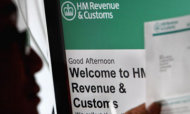
A staggering £1.1bn of unpaid tax could have been collected if jobs were not cut at HM Revenue and Customs (HMRC), according to a public spending watchdog.
The influential public accounts committee praised an HMRC crackdown which has brought in an extra £4.32bn in five years - 11 times what it cost.
But it said the decision to axe 3,300 posts at the same time appeared to have undermined its effectiveness and urged caution over further reductions.
"We are not convinced that the decision to reduce staff numbersworking in this area in the past represented value for money for the taxpayer," it said.
HMRC failed to be "sufficiently clear about the marginal rate of return it could achieve from different levels of spending" in budget discussions, it suggested.
The MPs welcomed HMRC's move to reinvest £917m of the savings in boosting staff numbers to step up its enforcement operations but said lessons had to be learned from the previous experience and benefits better calculated.
"It is essential to take on board the lessons so far if the return on this new investment is to be maximised," the Labour chair of the committee Margaret Hodge said.
"In particular the department needs to be much clearer about the marginal rate of return it could achieve from different levels of spending."
Mark Serwotka, general secretary of the Public and Commercial Services union , said: "The effort to ensure people pay the taxes they owe will continue to be seriously undermined by job cuts.
"The case for investment in our public services could not be starker or more obvious than it is in HMRC, yet the Government is actually planning to cut 10,000 more jobs from the department in the coming years."
The committee also expressed shock today at reports that HMRC officials authorised tax avoidance by senior public sector employees.
MPs said it was "incredible that the department could under any circumstances advise that this was acceptable behaviour for a public servant".
The criticisms by the influential Commons public accounts committee came as the Government launched a crackdown on off-payroll salaries.
A review identified more than 2,400 cases of public sector staff being employed indirectly - some potentially avoiding full income tax for a decade or more.
Since January, 350 such contracts have been ended.
In a report into HMRC's tax compliance regime, the committee said it had been inconsistent in deciding on the appropriateness of allowing such arrangements.
An HMRC spokeswoman said: "The Government made £917mn available to us in 2010 to target avoidance, evasion and fraud.
"This has been used in part to boost the number of jobs in our enforcement and compliance work.
"The development of e-services, allowing us to move staff into compliance roles, together with new computer systems such as Connect and more effective use of risk profiling, has resulted in a doubling of our compliance take since 2005 to £13.9bn last year.
"We are set to increase this by a further £7bn a year by 2014."

©Sky News

Wednesday, 23 May 2012

Ex-UK editor Morgan accused again on hacking


One of Britain's most respected journalists said on Wednesday that former tabloid newspaper editor Piers Morgan showed him how to hack into phones 10 years ago, the latest twist in a scandal that has so far centred on Rupert Murdoch.
Morgan, now a CNN talk-show host in the United States, has consistently denied authorising phone hacking during his time as editor of the Daily Mirror.
The criminal practice has damaged Murdoch's reputation, led to the closure of his News of the World newspaper and prompted ajudicial inquiry into media standards.
On Wednesday, the BBC's Jeremy Paxman told the inquiry that Morgan had boasted to him at a lunch in 2002 about how easy it was to access the voicemail messages of mobile phones.
"He turned to me and said: 'Have you got a mobile phone?' I said yes and he said: 'Have you got a security setting on the message bit of it?'," Paxman said.
"I didn't know what he was talking about. He then explained that the way to get access to people's messages was to go to the factory default setting and press either 0000 and 1234, and if you didn't put your own code in, his words, 'you are a fool'."
Trinity Mirror, publisher of the Daily Mirror, has denied that any of its journalists hacked phones, but its shares fell sharply on Wednesday after Paxman's appearance at the high-profile Leveson Inquiry. They closed down 5.5 percent.
Morgan, who edited Murdoch's News of the World from 1994 to 1995 before editing the Daily Mirror from 1995 to 2004, was called to appear before the inquiry last year after his name became associated with the scandal.
He had written in his published diaries about a "little trick" for eavesdropping on voicemails that he had heard of as early as 2001.
Morgan told the inquiry in December that the boasts were merely a repetition of rumours about journalistic "dark arts".
Paxman said Morgan had told him about phone hacking at the 2002 lunch at the offices of Trinity Mirror in London, which was also attended by the Swedish television personality Ulrika Jonsson.
The Mirror had previously revealed that Jonsson had had an affair with the then England football manager Sven-Goran Eriksson, and Paxman said Morgan teased Jonsson that he knew about private conversations between her and Eriksson.
An assistant for Morgan declined to comment on Wednesday but the former editor said on Twitter: "Right - that's the last time I'm inviting Jeremy Paxman to lunch. Ungrateful little wretch."
Morgan, who took over Larry King's chat-show slot on CNN, has also denied allegations from the former wife of Paul McCartney that he had listened to a hacked voicemail message left for her by the former Beatle.
Morgan bragged about hearing the message in a newspaper column in 2006 but has refused to divulge how he came upon it.
The Leveson Inquiry was set up last year by British Prime Minister David Cameron after the closure of the News of the World, owned by News International - the British publishing division of Murdoch's News Corporation.
(This story is re-filed to fix headline)
(Reporting by Kate Holton; editing by Pravin Char)

©Reuters