Monday, 11 June 2012

Cameron leaves daughter, 8, at pub


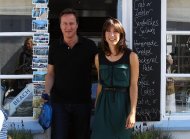
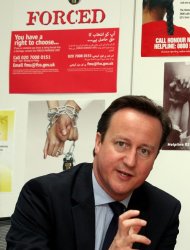
Prime Minister David Cameron left his eight-year-old daughter in a pub following a Sunday lunch, after a mix-up with his wife Samantha.
The couple's daughter Nancy wandered off to the toilets while they were arranging lifts and they only realised she was not with them when they got home, The Sun said.
Mr Cameron rushed back to the Plough Inn in Cadsden, Bucks, where he found his daughter with staff.
A Downing Street spokesman said: "The Prime Minister and Samantha were distraught when they realised Nancy wasn't with them.
"Thankfully when they phoned the pub she was there safe and well.
"The Prime Minister went down straight away to get her."
The Camerons were at the Plough Inn - near the Prime Minister's country retreat Chequers - with Nancy and their other children Arthur, six, and 22-month-old Florence, as well as two other families.
When Mr Cameron left the pub he went home in one car with his bodyguards and thought Nancy was with his wife and their other children in another car. Mrs Cameron had assumed her eldest daughter was with her father.
The mistake was only discovered when they got home.
Mr Cameron drove back to the pub and found Nancy helping staff. She was away from her parents for about 15 minutes.

©Press Asssoiation

Sunday, 10 June 2012

'Legal High' Warning After Festival Death


Police have issued warnings about a legal high called Benzo Fury following the death of a 19-year-old man at the RockNess Festival.
The teenager, from Edinburgh, was taken ill in the main arena late on Saturday night.
Northern Constabulary police officers said they were investigating the possibility he had taken drugs.
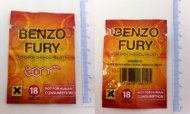
Later police issued photographs of a substance called Benzo Fury, saying they believed it to be "in circulation" and believed it "may be dangerous".
A statement said: "Police and health professionals have issued a warning to people not to take non-prescribed medicines.
"Advice is that the term 'legal' does not mean 'safe'.
"Advice to anyone in possession of this drug is not to consume it."
Police said the 19-year-old, who has not been named, was taken to the hospital tent and stabilised before being transferred to Raigmore Hospital in Inverness.
He failed to respond to treatment and died in the early hours of Sunday morning.
A statement from the Northern Constabulary, said: "Early indications are that the man may have consumed drugs and this is one of the lines of enquiry at this stage.
"A post mortem will be carried out to determine the cause of death."
The teenager was visiting the festival from Portobello in Edinburgh.
Meanwhile, police have named two men who were killed on Friday in a crash involving a bus taking people from Edinburgh to the festival.
A van driver and his passenger died of their injuries following a collision with a bus on the A9 at Ralia, in the Highlands.
They are Mark McFarlane, 38, and Barry Murray, 28, both painters and decorators from Glasgow.
The bus driver was airlifted to the Southern General Hospital in Glasgow with serious injuries after she became trapped in the vehicle.
Fourteen passengers were taken to Raigmore Hospital for treatment to a range of injuries, none of which are life-threatening.
RockNess draws about 35,000 people over the three days it is held and it takes place on the banks of Loch Ness.
Headline acts this year include Ed Sheeran, Mumford & Sons and Biffy Clyro.

Ministers 'should focus on economy'


Gay marriage should not be a priority for the Government, a senior Tory said
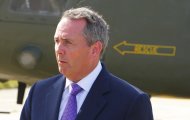
Former defence secretary Liam Fox added his voice to calls for the Government to concentrate on other issues such as the economy rather than force through legislation to introduce gay marriage.
Speaking on Sky News, Dr Fox said: "This is a contentious issue but I have to say that I am much more in favour of social mobility than social engineering.
"I think that the vast majority of the public have a completely different set of priorities from what I would call the metropolitan elite and I think they will be looking for economic and social issues to be dealt with first."
The debate has been a source of division in the coalition Government.
Recently, the Deputy Prime Minister Nick Clegg said gay marriage should not be left to MPs' consciences but the Tories will be allowed a free vote to avoid a rebellion from those opposed to the issue.
Critics have questioned Mr Cameron's commitment to the reform after he conceded to a free vote to quash an expected a rebellion among backbench Tories.
Conservative Northern Ireland Secretary Owen Paterson has also declared his opposition to same-sex marriage in the most high-level challenge to Mr Cameron so far on the issue, while defence minister Gerald Howarth is also against the move.

©Press Association

MPs To Vote On Changes To Human Rights Law


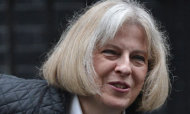
Home Secretary Theresa May is seeking the backing of MPs to tackle foreign criminals who use human rights laws to avoid deportation.
She is expected to ask members to pass a motion declaring the right to a family life - enshrined in Article 8 of the European Convention on Human Rights - is not absolute.
Ms May wants the public interest to come first and the right to family life to be superceded by the need to protect the economic wellbeing of the country, promote public safety and cut crime.
The move is likely to be seen as a direct challenge to judges who have previously interpreted Article 8 through the development of case law.
"This is not an absolute right. So in the interests of the economy or of controlling migration or of public order - those sort of issues - the state has a right to qualify this right to a family life," she told BBC1's The Andrew Marr Show.
"What I am going to do is actually set out the rules that say this is what Parliament, this is what the public believe is how you balance the public interest against the individual's interest.
"We are going to ask Parliament to vote on this to say very clearly what constitutes the right to a family life.
"I would expect that judges will look at what Parliament will say and that they will take into account what Parliament has said.
"If they don't then we will have to look at other measures and that could include primary legislation."
According to Home Office figures, last year 185 foreign prisoners successfully appealed against deportation after citing the right to family life.
Ms May's comments come as ministers prepare to impose a new "financial independence" rule intended to curb the number of spouses, children and other dependants of migrants coming into the country.
Immigration Minister Damian Green said: "We will shortly be announcing a major overhaul of the existing family migration rules, to reduce burdens on the taxpayer, promote integration and tackle abuse.
"The reforms will protect the British public from foreign criminals who try to abuse human rights laws to avoid deportation.
"We plan to make it clear when the rights of the law abiding majority will outweigh a foreign criminal's right to family and private life."

Saturday, 9 June 2012

Tories 14 points behind Labour


The Tories have slumped to a 14-point deficit behind Labour, according to an opinion poll.
The survey for the Sunday Express by pollsters Angus Reid puts David Cameron's party on just 29% - compared to 43% for Labour.
The paper said that it represented Labour's biggest lead over theConservatives since December 2002 when Tony Blair was in Downing Street and Iain Duncan Smith was the Tory leader.
The poll findings also make grim reading for Mr Cameron's coalition partners, the Liberal Democrats, who are on just 9% - level pegging with the UK Independence Party.

©Press Association

Osborne in eurozone economy warning


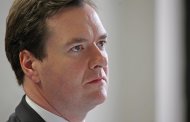
Britain's prospects for economic recovery are being "killed off" by the crisis in the eurozone, Chancellor George Osborne has warned.
In a stark message to the leaders of the 17-nation single currency bloc, Mr Osborne said they were facing a "moment of truth" which could determine the future of the entire continent for years to come.
In some of his strongest comments to date, the Chancellor voiced his exasperation at the repeated failure of the eurozone nations to find a permanent solution to end the financial turmoil.
Writing in The Sunday Telegraph he said: "The lesson of the last two years is that treating the latest symptom does not cure the underlying conditions."
While there were signs a solution to the latest bout of uncertainty in the Spanish banking system was on the cards, Mr Osborne said it would not be enough to end the threat to the UK economy.
"Our recovery - already facing powerful headwinds from high oil prices and the debt burden left behind by the boom years - is being killed off by the crisis on our doorstep," he said.
"I know from talking to British businesses that our country is bursting with entrepreneurial spirit and exciting investment plans that are being held back because of uncertainty about the future. That's why a resolution of the eurozone crisis would do more than anything else to give our economy a boost."
He added: "The British Government is clear that it is strongly in Britain's interests for our biggest export market to succeed; the risks for us of a disorderly outcome are huge."
With the prospect of further turmoil in the wake of the of the forthcoming re-run of the Greek elections, the Chancellor called on the eurozone countries to take decisive action to end the instability. He said: "We are approaching a moment of truth for the eurozone. After more than two years of uncertainty, instability and slow growth, decisions taken over the next few months could determine the economic future of the whole European continent for the next decade and beyond."
He again underlined the need for greater fiscal integration - with more pooling of financial resources and the creation of a banking union - across the currency bloc, saying: "The solution in the eurozone doesn't have to be a full-blown United States of the Eurozone, but if it is to be successful it is likely to include most of the mechanisms that make other currencies work."

©Press Association

Spain 'Will Seek Eurozone Aid After Audit'


Spain will ask for eurozone aid - but not until it has a clearer picture of the amount of capital its banks need, according to reports.
It comes after a Spanish official denied the government was about to seek an international bailout to help recapitalise its ailing banking system, despite widespread reports an application for financial assistance is imminent.
The country's prime minister, Mariano Rajoy, has admitted his government cannot afford to fund an estimated 40bn euro (£32bn) bill to prop up Spain's banks.
But Madrid has said it wants to wait until June 21 for the publication of two independent audits of its banking system to decide how much money is needed.
Reports now say Spain insisted on this during a conference call of the eurozone's 17 finance ministers on Saturday.
On Friday night, the International Monetary Fund (IMF) rushed to publish its own analysis that said Spain's banks need at least 37bn euro (£30bn) to cope with the slump in property values.
European and IMF officials are reportedly keen to draw a line under speculation about Spain's future before next weekend's general election in Greece, which could see it leave the euro.
The head of Germany's central bank, Jens Weidmann, has urged Spain to seek a bailout if it needs one: "If Spain feels overwhelmed by its financial needs, it should use the instruments which have been created for that."
The recently elected government of Mr Rajoy wants to avoid the embarrassment of a bailout, having already implemented a regime of public sector spending cuts and labour market reforms to bring its budget deficit under control.
Spain is already struggling with rising discontent towards austerity with the eurozone's worst unemployment rate.
Almost 25% of the workforce is unemployed and the rate is above 50% among young Spaniards.
The stress tests carried out by the IMF showed that while Spain's top two banks - BBVA and Banco Santander - remain solid, the rest of the banking structure is struggling.
If the current stress on the system continues "the largest banks would be sufficiently capitalised to withstand further deterioration, while several banks would need to increase capital buffers", the IMF said.
If Madrid feels it has no option but to ask for help, it would mean the eurozone sovereign debt crisis has defied the authorities' desperate attempts to limit the need for rescues to smaller periphery states.
It would also see the eurozone in uncharted waters after two years of turmoil - Spain's economy is the fourth-largest in the eurozone and more than twice the size of Greece's, Ireland's and Portugal's combined.
On Friday, US President Barack Obama urged Europe to act swiftly to fix its banking woes or pay the price.
IMF managing director Christine Lagarde also urged European leaders to act without delay to overcome the crisis, warning that "we stand at a crossroads".
Ms Lagarde appeared to respond to German Chancellor Angela Merkel, who spoke about long-term plans of rebuilding Europe.
"Policymakers need to lay out and follow a clear roadmap of how to finish the job - not just looking to the next five or 10 years, but looking to the next weeks and months ahead," Ms Lagarde said.