Showing posts with label economic. Show all posts

Saturday, 9 June 2012

Osborne in eurozone economy warning


Britain's prospects for economic recovery are being "killed off" by the crisis in the eurozone, Chancellor George Osborne has warned.
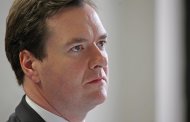
In a stark message to the leaders of the 17-nation single currency bloc, Mr Osborne said they were facing a "moment of truth" which could determine the future of the entire continent for years to come.
In some of his strongest comments to date, the Chancellor voiced his exasperation at the repeated failure of the eurozone nations to find a permanent solution to end the financial turmoil.
Writing in The Sunday Telegraph he said: "The lesson of the last two years is that treating the latest symptom does not cure the underlying conditions."
While there were signs a solution to the latest bout of uncertainty in the Spanish banking system was on the cards, Mr Osborne said it would not be enough to end the threat to the UK economy.
"Our recovery - already facing powerful headwinds from high oil prices and the debt burden left behind by the boom years - is being killed off by the crisis on our doorstep," he said.
"I know from talking to British businesses that our country is bursting with entrepreneurial spirit and exciting investment plans that are being held back because of uncertainty about the future. That's why a resolution of the eurozone crisis would do more than anything else to give our economy a boost."
He added: "The British Government is clear that it is strongly in Britain's interests for our biggest export market to succeed; the risks for us of a disorderly outcome are huge."
With the prospect of further turmoil in the wake of the of the forthcoming re-run of the Greek elections, the Chancellor called on the eurozone countries to take decisive action to end the instability. He said: "We are approaching a moment of truth for the eurozone. After more than two years of uncertainty, instability and slow growth, decisions taken over the next few months could determine the economic future of the whole European continent for the next decade and beyond."
He again underlined the need for greater fiscal integration - with more pooling of financial resources and the creation of a banking union - across the currency bloc, saying: "The solution in the eurozone doesn't have to be a full-blown United States of the Eurozone, but if it is to be successful it is likely to include most of the mechanisms that make other currencies work."

©Press Association

Wednesday, 4 April 2012

'So I Won't Leave Debts for My Children': Man Commits Suicide to Protest Greek Economic Crisis


A 77-year-old Greek man took his life in Athens' central Syntagma Square early Wednesday, police said, in what appeared to be a protest against a deepening economic crisis that has coincided with a rising national suicide rate.
The man shot himself with a handgun several hundred meters from the entrance to the Greek parliament building in a grassy area to one side of the Greek capital's main square.
According to state-owned NET television, the man was a former pharmacist and left behind a suicide note, that appeared to liken Greece's current crisis to the deep poverty the country suffered during the World War II German occupation.
"I have no other way to react apart from finding a dignified end before I start sifting through garbage for food," the suicide note said according to NET.
Police spokesman Panagiotis Papapetropoulos said authorities weren't aware of a note. The police haven't disclosed the identity of the man or other details, pending notification of the next of kin.
"There was a suicide involving a 77-year-old man in Syntagma Square," Papapetropoulos said, adding that the police were investigating the incident.
Eyewitnesses said the man was in apparent despair over his financial debts, shouting just moments before killing himself: "So I won't leave debts for my children."
Following the shooting, groups of Athenians stopped by the point where the suicide took place in order to leave flowers and sympathy notes.
Government spokesman Pantelis Kapsis described the suicide as "a human tragedy" that took place under unknown conditions.
"We must all be calm and respect the real causes (of the suicide), which are not yet known," he said.
The suicide also evoked sympathetic responses from a series of Greek politicians who blamed the austerity for the incident.
Greece is now in its fifth year of a grinding economic recession made worse by successive waves of austerity measures the country has taken to meet the demands of its international creditors from the European Union and the International Monetary Fund.
Those various austerity measures have led to steep cuts, in some cases more than 25%, in retiree pensions and other benefits. At the same time many Greeks are being squeezed by declining wages and higher taxes on everything from property to petrol.
"This was a symbolic suicide. If it hadn't happened here, in the square, in front of parliament, no one would notice," said one bystander, who declined to give his name but who heard the shots from across the square.
The social impact of the economic crisis has become increasingly apparent on the streets of Athens and other cities, while suicide rates have jumped. In one notable case last September, a Greek man in his 50s who was struggling with his debts attempted suicide in front of a bank branch in the northern city of Thessaloniki by setting himself on fire.
According to police data, the number of suicides in both 2010 and 2011 surpassed 600 each year, a 20% jump over the rate in 2009, the year before the start of the Greek debt crisis.